-
Overview
-
Structure
-
FACULTY
-
Careers & Companies
-
Fees & Financial Aid
-
Apply
-
 More
More
Information -
 Download
brochure -
 Book your orientation meeting
THE MASTER IN SUSTAINABILITY MANAGEMENT AT BBS GIVES YOU THE OPPORTUNITY TO:
• embrace the complexity of climate challenges
• innovate for the circular economy
• drive purpose-driven strategies that create measurable impact
• gain the skills, network, and vision to lead organisations through the sustainability transition
• accelerate your career in the Sustainability field through a flexible part-time hybrid format
GOALS
The Master in Sustainability Management aims to provide its participants with all the tools and skills to address the global challenges of ecological transition in order to develop a professional career in sustainability.
Five study programs on the transition to sustainability in industry, energy, urban systems, agriculture, and mobility provide a systemic vision to make a positive impact in business both economically, environmentally, and socially.
Part-time, hybrid (80% online, 20% in-person), 12-month, and English-language, the Master in Sustainability Management is dedicated to an international core audience and allows students to follow a challenging and stimulating curriculum even remotely.
Bologna Business School‘s link with the University of Bologna, first for sustainability in Italy according to the QS Sustainability 2024 Ranking, guarantees those who attend this Master a top-level management education combined with the most advanced study of environmental and social sustainability topics.
On-campus classes will be held one week in May 2026 in Bologna and one week in October 2026 at the University of Galway, a partner of BBS and its global network of companies and institutions. A powerful network that will result in concrete career opportunities.
WHO IS IT FOR?
Young graduates with an excellent knowledge of English who want to acquire the skills needed to play an active role in the transition to sustainability, now the primary focus of all global companies.
The Master in Sustainability Management combines management knowledge with the unique expertise of Bologna Business School, the first in Europe and among the first in the world to study transition practices to economic, environmental, and social sustainability.
The Master in Sustainability Transition Management is now available in executive format. This flexible program is perfect for working professionals seeking to develop advanced skills in sustainability management. It allows you to delve into sustainability transition challenges without putting your career on hold.
Find out more and apply here: Master in Sustainability Management (Executive) | BBS Italy
CAREER OPPORTUNITIES
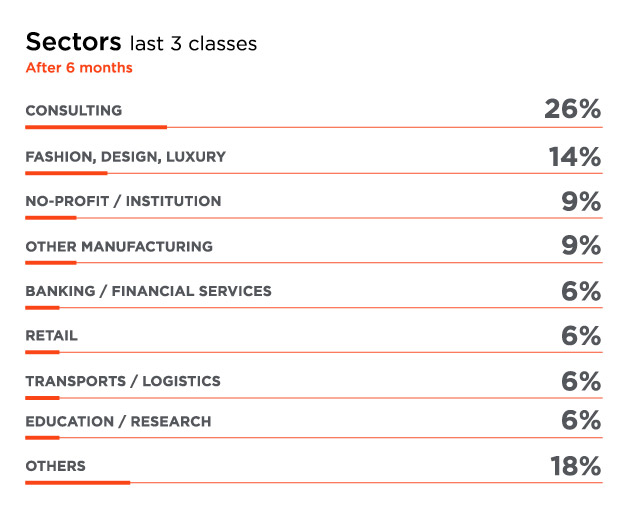
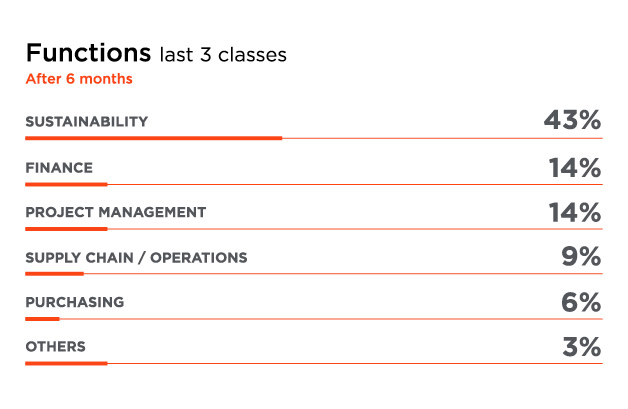
The international BBS network, supported by the work of the Career Service, a dedicated tool for students to decide together with them the steps they need to take to plan a brilliant career, and the final internship make students of the Master in Sustainability Management able to aspire to roles such as ESG Manager, Sustainability Project Manager, Sustainability Consultant and many others into an interdisciplinary field that affects all businesses of the present and future.
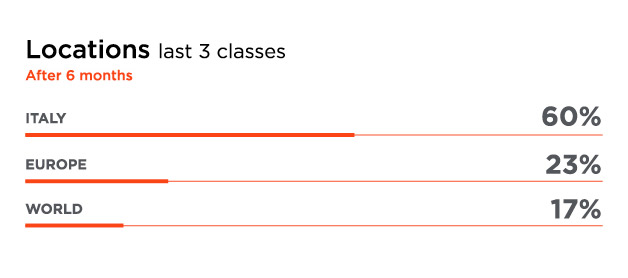
Italy represents the right place to improve your skills on sustainability transition and develop a new mindset ready for the “new normal”.
Key facts:
• The University of Bologna ranks 1st in EU and 6th in the world in sustainability (FT Global Ranking 2020).
• Bologna will host the new European Weather Forecast Data Centre of the ECMRW
• Data science for sustainability represents a core capability of the Bologna business ecosystem
• Italy ranks 1st in EU with +25% growth rate of companies that implement sustainability practices and 2nd (after Luxembourg) in resource efficiency outcomes.
• The Italian energy giant Enel Green Power is one of the largest renewable-energy companies in the world, with 46 gigawatts of installed capacity.
• The clean technologies market in Italy is around 30 billion euros.
Accreditation

Bologna Business School is EQUIS – EFMD Quality Improvement System accredited, one of the most important international quality assessment and continuous improvement systems for Schools of Management and Business Administration.
Matteo Mura
"Our students will be equipped with all the tools necessary to make a difference in the sustainability arena. We are proud to train new leaders who take into account the importance of sustainability transition, renewable energies and the SDGs. Thanks to an international faculty and prestigious guests, participants will receive training with the right balance between theory and practice."
Structure
The Master is a part-time hybrid program, structured in 270 teaching hours (80% online, and 20% in presence). Lessons will take place two evenings a week (i.e. Tuesday and Thursday. 6:00 – 9:00 p.m. CET) and few Saturday mornings during the year (10:00 a.m. – 1 p.m. CET). Each online session lasts about three hours and combines lectures, case discussions, team-working among participants and sustainability transition dialogues with though leaders in the field. Thanks to a smart formula, you will be able to combine work and private life while attending the Master.
The residential classes will take place one week on campus in May 2027 at Bologna Business School and one week in October 2027 at the University of Galway. During the residential classes, the participants will attend laboratories, Company visits, and events in collaboration with the business network.
During the on campus weeks, students will attend the following courses and laboratories:
- Industrial Transition
- Energy Transition
- Urban Transition
- Agricultural Transition
- Mobility Transition
The Master Kick Off will take place in December 2026, while the lessons will start in January 2027.
COURSES
The course will provide an overview of critical global standards and frameworks regarding corporate sustainability
developed by the UN and EU – with particular focus on the UN Guiding Principles on Business and Human Rights, the upcoming EU
Corporate Sustainability Due Diligence Directive, and the 2030 Agenda for Sustainable Development (the SDGs). Additionally, students
will increase their awareness of key pressure points of corporate accountability: civil society, and investors — and how understanding
how by working with these key stakeholders, companies can become truly sustainable in the long term.
Human-caused climate change is one of the most serious issue of our time and it portends
unprecedented environmental changes for our societies and future generations. Terms like “global
warming”, “climate change” or “greenhouse effect” are nowadays commonly used by non-specialists,
although this is often done without a clear understanding of the science behind them. Understanding
the science of human-caused climate change is essential to understand the economic, political and
moral dimension of it, and ultimately to tackle it. The objective of this course is to explain the basics of
the climate change science in a concise yet rigorous way, providing the scientific knowledge which
underlies all aspect of the human-induced climate change problem.
The course “geohazard and sustainability” will focus on the importance of geohazard and risk management in sustainable development. The environmental factors controlling and promoting the occurrence of a variety of natural events (e.g., earthquakes, floods, landslides, volcanic eruptions, extreme climatic events) will be analyzed, and the impact of these events on the environment, society, and business will be discussed, also with the help of guest lecturers
from business, industry, and public institutions.
The objectives of the course are: i) to help the students understand the importance of identifying, assessing, and managing geohazards in pursuing the UN SDGs, ii) to provide the students with a basic background on the factors that control the occurrence of natural events and disasters, iii) to raise the attention to the potential effects that natural hazards may have on business and society, and iv) to highlight the long-term effects that human activity can have on the environment.
The course focuses on the geographies and geopolitics of climate and environmental change and the related socio-ecological and political challenges. It aims to provide an overview on the development of climate and environmental thought, politics and governance and it adopts geographical approaches to reflect on the key actors, processes and conflicts. These issue are analyzed at a global scale together with regional focus in the Global South especially in Central and Southeast Asia.
Zinzani AndreaThe new sustainable transformation global agenda calls for a transdisciplinaryand interdisciplinaryanalysis of society’s complexityand crises. Environmental Economics gain hence a central role focusing on governingeconomicactivity while promoting sustainability, justice and well-being. Focusing on shared prosperity, human centered development and circular economy international leading agendas define the road forward. The United Nations 2030 Agenda andthe SDGs act as roadmapfor sustainability transition and globallocal andbusiness level. A call for all stakeholders, to collaborate and cooperate defining the necessary solutions to thepressing problems of Climate and Water Crisis, Inequalities, andSocial Justiceand contributefor a sustainable and resilientfuture. This course aimsat converging different agendas and systemic thinking surroundingecologicaleconomics and analyze the contribution toward the SDGs and Sustainable Development. Furthermore,aiming developing a critical thinking toward identified problems and solutions. With a focuson the centralrole ofentrepreneurshipand businesssectoras a driver of innovation and change.
Arvaniti Maria- Global energy scenario: production, demand and forecasts
- Circular economy and energy production (low enthalpy thermal waste recovery and waste management for energy purposes).
- Smart Energy Districts
- Hydrogen production and dispatch
The aim of the course is to introduce the fundamental concepts and research methodologies of business ethics and discuss their practical application for successfully managing business in a globalized world. During the course, the main normative ethical theories (deontology, utilitarianism, virtue ethics) will be discussed, exploring their usefulness to analyze decision-making processes within organizations and their relevance for defining corporate responsibility towards all organizational stakeholders. After discussing the empirical findings of descriptive ethics, participants will explore the key elements for an effective corporate ethics program, starting with a code ethics and including implementation mechanisms and processes.
de Colle SimoneOver the last decade sustainability, corporate social responsibility and stakeholder management practices have become paramount for companies as well as for the society at large. Although most companies have developed sustainability programs over the years, as they’re cutting carbon emissions, reducing waste, and otherwise enhancing operational efficiency, we are witnessing a mishmash of sustainability tactics that does not add up to a sustainable strategy. To endure, a sustainable strategy has to cope with the competing – and apparently divergent – interests of all stakeholders: investors, employees, customers, governments, NGOs, and society.
In this context corporate Performance Measurement Systems (PMS) play a key role as they help companies to formalize and implement their sustainable strategies as well as to proactively identify new trajectories that help companies to appropriately reconcile the trade-offs between different stakeholders’ wants and needs.
Canal Vieira Leticia
The purpose of this module is to increase awareness of the role and functioning of modern corporations as sustainability challenges, opportunities, and solutions emerge. My objective is to enhance our collective awareness of the multiplicity of issues associated with sustainability and explore what all of this means for firms. Towards this end, I have outlined three facets of sustainability – adapting to new demands, dealing with multiple stakeholders and creating a temporal horizon– that can serve as the basis for deepening your understanding of issues connected with sustainability.
Esposito MarkOverall aim of this course is to cover the most important aspects of value chain, including those aspects that concern interorganizational/supply chain or intraorganizational issues, e.g., sourcing and distribution, and to explain how sustainability-oriented innovation needs to be considered across all the aspects. Above all, instead of sustainability being treated separately, the intention in this course is that sustainability-oriented approach is considered in the context of each topic.
Miandar ToloueThe ultimate purpose of the course is to explore the many dimensions of new venture creation & growth in independent as well corporate settings looking at both process and people involved in assessing ideas, exploiting opportunities, and converting concepts into green and sustainable businesses that can really add up to a global sustainable strategy. The candidates will develop a methodological toolkit to design, understand, and evaluate green business projects. The capstone project for this course will require you to work as a team of consultants offering advice to a real-world green start-ups, using the tools you have accumulated in the course.
Giuliani Antonio PacoThe great social challenges of our time, incorporated into the 2030 agenda of the United Nations through the objectives of sustainable development and the crisis of modern capitalism based on maximum shareholder value, require a change of course in traditional business models and put the issue of corporate sustainability back at the centre. In this context, a new model of entrepreneurship is emerging where companies respond to social problems through new models, methods and products and services combining the objectives of economic and financial performance with the pursuit of a positive social impact. The module addresses the main concepts, approaches and practices to understand the main forms of social innovation and their impact on production and organisational processes and the effects on the reputation of enterprises.
Fia MagalìThe course will allow students to gain a solid and robust understanding of how institutional investors finance and invest in the renewable energy sector: how to assess the key commercial, legal, macro-economic and technological risks, what tools to use to mitigate them, and how to measure return on investment. Students will solve a real life business case where they will learn how to use a financial model that forecasts on a 20+ year horizon the profit & loss, balance sheet, cash-flow statement of a renewable energy company.
Vescovo ClaudioMoving from linear to circular economy needs a complete rethinking of products, processes and supply chains. This transition calls for the adoption of an anticipatory approach based on which the life-span, the functions, and the generation of waste should be kept in mind in the design stage to identify and prevent potential impacts in each step of the value chain but also maximize, add and maintain value in the further loops. Despite the existence of waste management systems, materials are still a pervasive presence in the environment, with resulting social concerns. By reconnecting societal needs and environmental pressures with company value proposition, externalities can be reduced, and value can be shared. Circular economy is the way to embrace corporate responsibility: reuse, repair, refurbish, remanufacture and repurpose, over than recycling, are among the circular strategies that support organizations to address a socio-technical innovation and change the business models in a sustainable way.
Foschi EleonoraThe course highlights the risks of greenwashing and emphasizes the significance of ethical communication in sustainability matters. Students will learn to recognize and combat deceptive practices while promoting genuine and transparent sustainability efforts. The goal is to equip students with the skills needed to foster honest sustainability communication, ensuring a responsible corporate governance and avoiding reputational and legal risks.
Flamini ElisaFaculty
Faculty members at Bologna Business School work together offering outstanding teaching standards. An international and interdisciplinary approach is guaranteed by a joint team of distinguished national core professors, adjunct, visiting professors, guest speakers and top managers.
-
Maria Alessandra Ancona
Assistant Professor of Energy Systems and Power Generation
University of Bologna
-
Maria Arvaniti
Assistant Professor of Economics
University of Bologna
-
Leticia Canal Vieira
Adjunct Professor
University of Bologna
-
Simone De Colle
Full Professor of Business & Strategy
IÉSEG School of Management
-
Davide Donati
Assistant Professor of Engineering Geology
University of Bologna
-
Mark Esposito
Faculty Associate
Berkman Klein Center - Harvard University
-
Magalì Fia
Post-Doctoral Researcher
University of Bologna
-
Elisa Flamini
Sustainability Manager
Green Media Lab
-
Eleonora Foschi
Permanent Researcher in Circualr Economy
Italian National Agency for New Technologies, Energy and Sustainable Economic Development (ENEA)
-
Gardner Luzzatto Nina
Adjunct professor in the international law department
Johns Hopkins SAIS - Washington DC and Washington College of Law - American University
-
Antonio Paco Giuliani
Associate Professor of Entrepreneurship
IÉSEG - School Of Management
-
Toloue Miandar
Junior Assistant Professor of Organization and Human Resource Management
University of Bologna
-
Salvatore Pascale
Junior Assistant Professor of Physics of the Earth and of the Circumterrestrial Medium
University of Bologna
-
Claudio Vescovo
Managing Director - Head of Credit Fund
Glennmont
-
Andrea Zinzani
Assistant Professor of Geographies of the Environment
University of Bologna
CAREER DEVELOPMENT
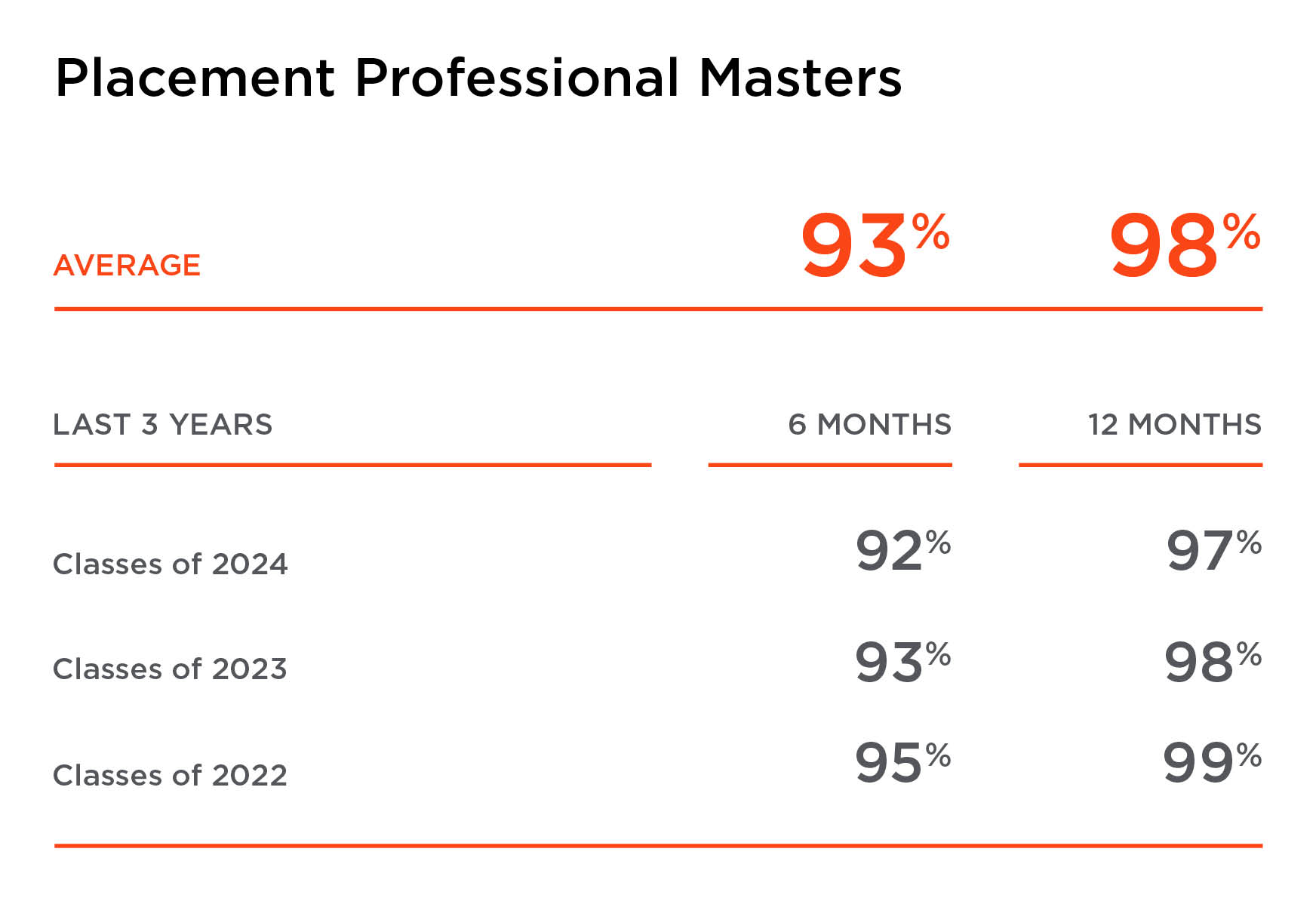
The integration with companies is a priority and an ever-present feature of all programs of the Bologna Business School, hence for the Master in Sustainability Management.
The School is fully committed to creating employability, by way of a systematic career service action, constantly focused on matching at best the students’ professional projects with the needs companies have.
At the end of the didactic activities an internship or project work will allow participants to apply what they have learned and to use tools and competencies acquired.
The BBS Career Service assists and supports students since the very beginning, along a training and professional development path. This is accomplished by organizing a series of workshops, with the aim of providing the fundamental tools and resources to be appropriately prepared for the labor market.
To achieve this goal, students are involved in several workshops, among which we may list:
- Writing a CV and a Cover Letter
- How to create an effective Linkedin profile
- How to prepare for a job interview
In addition,thanks to the collaboration with professional career counselors, students receive a customized service, in order to understand their strengths and to build a professional development plan, which will turn out to be helpful when looking for an internship. Here follow some of the activities:
- Initial guidance interviews
- Specific interviews, focused on one’s own career plan
- Continuous support to students with one – to – one sessions
Alumni

Elena Marinoni – Italy
Project Manager Analyst, Crédit Agricole Italia
Master in Sustainability Management (A.Y. 2023/2024)
"The Master was a demanding but highly transformative experience. Built on strong scientific foundations and enriched with business-oriented thinking, the programme approaches sustainability from a cross-disciplinary perspective, providing practical tools to navigate complexity and support transition processes. For me, it was a valuable opportunity for both personal and professional growth, strengthening my skills, broadening my perspective, and fostering meaningful relationships with faculty and peers. I would encourage future students to approach the Master with openness, commitment, and active participation, being willing to step outside your comfort zone truly makes the difference."

Heather Sdao – Canada
Project Associate, UNIDO
Master in Sustainability Transition Management (A.Y. 2023/2024)
"The Master’s in Sustainability Transition Management strengthened my ability to work at the intersection of policy, industry, and sustainability. Through its interdisciplinary approach and practical focus, the programme enhanced my strategic thinking and systems-level understanding of sustainability transitions. The close engagement with practitioners and real-world case studies was particularly valuable for my professional development. My advice to future students is to fully engage with the applied projects and diverse cohort - they are key to getting the most out of the programme."

Gaia Roca – Italy
Sustainable Supply Chain Materials Specialist, Kering
Master in Sustainability Management (A.Y. 2022/2023)
"The Master profoundly impacted my life, enhancing my understanding of how business and environmental responsibility intersect. It equipped me with the skills and confidence to transform my passion for sustainability into a meaningful career. The knowledge and connections I gained through the program enabled me to secure my dream role at Kering, where I now play an active part in the Group's sustainability initiatives. I feel incredibly fortunate to work in a position that aligns perfectly with my personal values and professional aspirations. This master’s program truly opened doors to opportunities I had always hoped for, making my dream a reality."

Luca Ceroni – Italy
Sustainability Operations Project Specialist, Davines
Master in Sustainability Management (A.Y. 2020/2021)
"The Master in Sustainability Management has literally changed my life. It was the tip of a personal path of approaching environmental issues that for some years were constantly strengthened: initially as simple interests, later as a desire to make them become an integral part of my professional career. This Master helped me to change my role within my company, moving into the field of environmental sustainability. Thanks to this path with the BBS I have not only acquired new skills and the possibility of looking at sustainability from new points of view, but I have also met a new family of people who transmitted to me the desire for a better future that I am sure it will help me to fight every day to convey this enthusiasm to the people around me"

Federico Duca – Italy
Head of Development and Origination, Ric Energy
Master in Sustainability Management (A.Y. 2020/2021)
"If we want our world to be more sustainable, we need to learn to integrate sustainability into every aspect of our career and private life. The Master has provided me with transversal skills, able to integrate the business with every environmental, social and economic aspect, and it also gave me the opportunity to meet a class of unique people from all over the world. They made this master’s degree unique by making me grow in both professional and human side."

Virna Psarra – Greece
ESG Reporting & Traceability Specialist, Gruppo Florence
Master in Sustainability Management (A.Y. 2020/2021)
"The Master not only broadened my horizons by bringing me in contact with professors, guest speakers and fellow sustainability believers (in our class we love to call ourselves climate hooligans) that are committed to the sustainability vision, but also gave me the opportunity to shift my career by combining two things that I love & I am passionate for: sustainability & fashion. This master was by far the best choice I have made these last years."
COMPANIES
The goal of the Career Service is also to allow students to connect with national and international companies. Over the years, Bologna Business School has managed to establish a wide-ranging network and a sound partnership with leading companies in Italy, thanks to a personalized approach, based on each company’s needs. The collaboration features the following activities:
- Sharing internship opportunities
- Project works
- In-class activities with case studies presented by Managers and/or HR professionals
FEES
The tuition fees for the Master is 14,800 euro (VAT free) to be paid in three installments:
- First installment: 1.850 euros (by the enrollment deadline of the round you applied for)
- Second installment: 9.000 euros by 31/12/2026
- Third installment: 3.950 euros by 31/03/2027
The fee includes participation in the Master, all the study material available through the online platform, and access to the services and facilities of Alma Bologna Business School. Furthermore, the fee gives participants the right to take advantage of the supporting activities of the School, such as the master lectures by invitation. Free parking is also available within the BBS campus.
HONOR LOAN
For more information on honor loan, contact us by email: sustainability@bbs.unibo.it
SCHOLARSHIPS
At Bologna Business School, we believe in the merit and potential of our students. That’s why, for each round of selection, we offer partial scholarships of €4,000 and €6,000 to candidates who stand out for their academic background, professional experience, motivation, and career aspirations.
Scholarships are awarded by the Admissions Committee, following the selection process, to the most deserving candidates who are ready to make the most of a learning experience that combines academic quality, links with a strong business newtork, and an international outlook.
Please note that full scholarships are not available and that financial aid programs from the University of Bologna (i.e. DSU, ER.GO) are not eligible for the Professional Masters held at Bologna Business School.
REQUIREMENTS
The eligibility requirements include:
- A Bachelor’s Degree (must be obtained by the enrollment deadline)
- English language proficiency
The admission to the Master is subject to the positive evaluation of the selection test in line with the number of places available. The selection process, held online, consists of one Aptitude Test and one English Language Test, both prerequisites to be admitted to the motivational interview in English.
APPLICATION PROCESS
1. Register on “Students Online” by connecting to the site studenti.unibo.it
2. Select: First Level Master > Master in Sustainability Management
3. Pay the participation fee for the selection (60 euro)
4. Upload the required documents online:
- Curriculum Vitae in English
- Motivational letter in English
- Letters of reference in English (optional)
- Photograph of recognition
- Concentration Form
- Front and back copy of a valid ID or passport
- For degrees obtained in Italy: Self-certification of Bachelor’s degree with details of exams taken and relative grades
- For degrees obtained abroad: Dichiarazione di Valore (to be requested at the Italian Embassy in the country where the degree was obtained) or Diploma Supplement (to be requested at the university where the degree was obtained). In the event that the candidate is unable to obtain the Dichiarazione di Valore or Diploma Supplement at the time of enrollment, he/she may temporarily replace it with a Conditional Enrollment Form, which will be sent after enrollment by sustainability@bbs.unibo.it
For further guidance, students who obtained a bachelor’s degree abroad are encouraged to check the page below: https://www.unibo.it/en/teaching/enrolment-transfer-and-final-examination/declaration-of-value-translation-and-legalization
Additional documentation (if available):
- GMAT certification (score ≥ 550) or equivalent GRE certification (which exempts candidates from the aptitude test)
- English language certification (TOEFL, IELTS or Cambridge) certifying a minimum B2 level (which exempts candidates from the English language test)
To apply for the next available round of selection, please consult and download the following documents:
CALL FOR APPLICATIONS – MASTER IN SUSTAINABILITY MANAGEMENT 2026/27 GENERAL CALL – UNIBO PROFESSIONAL MASTERS 2026/27 OPERATING INSTRUCTIONS – STUDENTI ONLINE CONDITIONAL ENROLLMENTCONTACT US
DOWNLOAD BROCHURE
Book your orientation meeting
-
Overview
-
Structure
-
FACULTY
-
Careers & Companies
-
Fees & Financial Aid
-
Apply
-
More
Information -
Download
brochure -
Book your orientation meeting

Telefono: +39 051 2090143
Whatsapp/Viber: +39 3316276726
Email: sustainability@bbs.unibo.it