
-
Overview
-
Structure
-
FACULTY
-
Careers & Companies
-
Fees & Financial Aid
-
Apply
-
 More
More
Information -
 Download
brochure -
 Book your orientation meeting
THE PROFESSIONAL MASTER IN ENTREPRENEURIAL FINANCE AT BBS GIVES YOU THE OPPORTUNITY TO:
• experience a unique vibrant international environment
• connect with leading Italian companies
• do meaningful work that makes an impact
• join a new generation of finance professionals ready to develop cutting-edge tools for financial innovation and entrepreneurship
GOALS
The Master in Entrepreneurial Finance is designed for those who aspire to become financial leaders in the innovation and start-up ecosystem. Through a hands-on, forward-thinking approach, students gain strategic and operational skills in areas such as venture capital, innovation funding, and financial management in fast-paced, high-volatility environments.
Taught in English, full-time 12 months, the program includes 500 hours of internship with BBS partner companies. With a placement rate of over 90% within six months of graduation, this Master is a powerful launchpad for a career in finance, offering a direct bridge into the business market.
It is a unique opportunity to dive into the heart of entrepreneurship and face some of today’s most dynamic financial challenges.
Choosing BBS in Bologna means gaining a competitive advantage. With a vibrant tech startup scene, and a historic university ecosystem, Bologna blends academic excellence with innovation. Here, you’ll live in a stimulating international environment, build meaningful relationships, and engage with key industry players, all within a city known for its high quality of life and strong ties between academia and business.
The Master’s programme is run in collaboration with the Department of Management (DISA) at the University of Bologna and Bologna Business School.
WHO IS IT FOR?
This program is tailored for recent graduates in economics, finance, engineering, management, or related fields, with a strong command of English and a desire to master emerging financial technologies, support innovation, and actively contribute to the success of start-ups.
CAREER OPPORTUNITIES
The Master in Entrepreneurial Finance equips participants with the strategic and operational skills needed to support the growth of innovative businesses and start-ups. Graduates are prepared to take on impactful roles in venture capital, private equity, innovation consulting, and financial leadership within high-growth companies. They will be able to develop solid business plans, assess investment opportunities with precision, and operate effectively at the intersection of finance and innovation.
Typical career paths include roles such as Financial Analyst Consultant, Strategic Analyst, Investment Analyst, Risk Manager and many others.
SERVICES
Bologna Business School provides student support services included in the tuition fee for the Master.
Programme Advisory Committee:
- Marco Allegretti – Senior Partner – AI Fund, CDP Venture Capital
- Davide Caramico – Head of Americas Business Development, Digital Partnership, Ria Money Transfer
- Alessandra Caroni – Senior Economic Adviser, Her Majesty’s Treasury
- Apoorva Anand Srikkanth – Initiative Manager, Nesta
- Paolo Gianturco – Senior Partner, FSI Consulting & FStech Leader, Deloitte Italia
- Carlo Giugovaz – Founder & CEO, Supernovae Labs, Finnovaction
- Federico Sforza – Co-Founder & Creator, Banca AideXa
- Piero Crivellaro – Group Head Public and Regulatory Affairs, Nexi Group
- Gabriele Sabato – Co-Founder & CEO, Wiserfunding
Ranking
QS Quacquarelli Symonds is the international network focused on services, analysis and in-depth reports of post-experience and university education, geared toward international mobility and career development. The QS Online MBA Ranking is based on insights from the business world and a methodology that allows programs to be evaluated according to four parameters: Faculty and Teaching, Class Profile, Employability and Class Experience.
Accreditation

Bologna Business School is EQUIS – EFMD Quality Improvement System accredited, one of the most important international quality assessment and continuous improvement systems for Schools of Management and Business Administration.

Emanuele Bajo
Director of Studies
emanuele.bajo@unibo.it
"The rapid advancements in Artificial Intelligence and digital technologies have created unprecedented opportunities for entrepreneurial ventures in the financial sector. From innovative funding models to sophisticated data-driven decision-making, these technologies are transforming the way businesses are financed and managed. This program equips students with the skills and knowledge to navigate the evolving financial landscape while learning how to craft compelling business ideas, pitch them effectively to investors, and bring them to market. By fostering a deep understanding of the intersection between technology and finance, graduates will be prepared to identify opportunities, develop innovative solutions, and drive the growth of entrepreneurial ventures in an increasingly complex market."
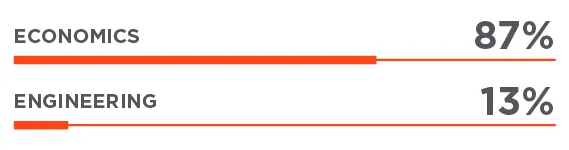
CLASS PROFILE 2025/2026
GEOGRAPHICAL ORIGIN
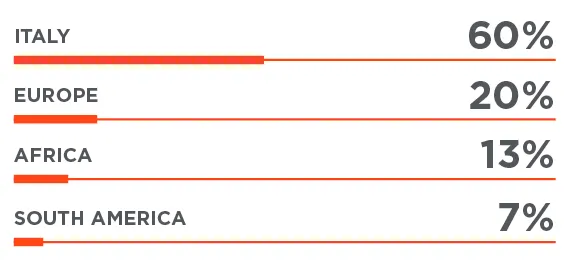
ACADEMIC BACKGROUND
-
25 y.o.
AVERAGE AGE
-
40%
INTERNATIONAL STUDENTS
-
7
COUNTRIES REPRESENTED
-
20%
FEMALE STUDENTS
Structure
The Master in Entrepreneurial Finance is a full-time program structured in 1.500 hours of learning activities over 12 months of study, divided into: 400 hours of lecturing, an estimated 600 hours of independent study, and 500 hours of internship.
The structure of the Master is divided into:
- First term: October 2026 – March 2027
- Second term: March 2027 – June 2027
- Internship: June 2027 – October 2027
The Master offers a series of pre-courses at the start of the academic schedule: Software programming (Python), database and SQL, statistics, finance and accounting.
Following the period of lessons and projects, students will start an internship that can be carried out at companies or agencies in Italy or abroad. This experience allows students to practically apply the theoretical and practical skills acquired during their studies, learning directly from industry leaders. At the end of the internship, the student will present a “Final Report” to the Director of Studies, containing a description of the activities performed and an analysis of the knowledge gained during the classes period.
For international students, the School offers the opportunity to participate in an Italian language course during the classroom study period.
The Master is held on campus at Bologna Business School. Attendance involves approximately 30 hours of weekly classes, structured to allow time for group work while also ensuring attention to individual students and the management of interpersonal relationships.
Students who are interested can also choose to take an extracurricular course of Italian.
COURSES
Today it is crucial to be able to use data for making better marketing decisions. This is possible by better understanding, predicting and managing customers’ behavior in a landscape where customers and brands (firms) are decision makers. This course focuses on the applied use of various techniques/methods, theories and approaches from marketing literature in practical business cases. In more particular words this means exploring, investigating and predicting behavioral and attitudinal (customer) data to provide data-driven answers to relevant marketing questions
Konus UmutThe course is focused on understanding of the opportunities arisen from digital transformation, in terms of innovative business models for companies and new value for users. Specifically, the course will deepen technology forecasting and technology roadmapping methodologies, applied to emerging digital trends, focusing on Fintech, IoT and Artificial Intelligence.
The course addresses the main ethical, political, and legal issues related to AI, with particular attention to the myth of artificial intelligence ethics, the political properties of information systems, and Italian and European regulations on AI. The conceptual analysis will be accompanied by the discussion of concrete cases. Participants will thus develop the ability to recognize fallacies, myths, and misleading narratives — which lead to the hasty adoption of immature products — and to identify realistic automation pathways that comply with fundamental rights.
Tafani DanielaThe course aims to explore the principles of financial statement analysis. It provides the participants with a framework to understand how businesses’ value and risks are captured in financial statements and price them correctly.
Dal Maso LorenzoMonaco Eleonora
The digitization of the economy is one of the most relevant issues of our time. The objective of this course is to analyze how digital economy has fundamentally challenged traditional business models and created new business opportunities. We will start with a brief introduction of the digital economy and then analyze the specific business strategies adopted by the different players in this ecosystem, specifically platforms. We will also discuss the implications for public policy and regulation. In particular, we will consider whether new business practices and contracts in the digital economy are beneficial or detrimental to society. Real case studies related to Amazon, Airbnb, Booking.com, Facebook, Google, Uber, and others, will be analyzed.
Mantovani AndreaThe “Sustainable Finance and ESG Investing” course explores the integration of environmental, social, and governance (ESG) factors into financial decisions and investments. Students will learn how sustainable investments can generate long-term value, and by the end of the course, they will be able to apply ESG strategies in the financial sector, responding to the growing demand for responsible investments.
Murad HarashehThis course emphasizes statistical methods useful for tackling modern-day data analysis problems. A special attention is dedicated to techniques that help managers to make intelligent use of databases by recognizing patterns and making predictions.
The students will develope skills to:
• plan a statistical data analysis process
• manage a data source
• choose the best method to analyze the data
• implement the analysis and interpret the results
Farné Matteo
This course will provide students with an overview of financial markets and the valuation of securities. The course will start presenting the financial system and a taxonomy of the type of securities traded in financial markets. The single asset classes will be then studied, including fixed-income and money market securities, equity instruments, mutual funds, financial derivatives, and hybrids.
Duqi AndiThe course deals with financial risk management with an emphasis on the recognition of price risk and on financial risk management tools from the point of view of the company. A significant part of the course is dedicated to the analysis of derivatives and their use in risk management.
Bajo EmanueleThe role of IT into banking industry is dramatic and innovative at the same time. Banking business models are redesigning by new paradigms: they will impact to strategies and operational perspectives. Banking players need to be into the new picture, supported by new toolkit able to combine the current landscape with new technologies.
Last but not least, ITC firms, media networks, and Big techs companies are the new entrants into financial services arena. FinTech emerging applications are disruptive forces capable to transforming the financial services industry by making transactions faster, cheaper, more secure and transparent. Our banking course delivers a general framework of financial industry and provide some specific knowledge into the disruptive innovation in terms of organization/processes/infrastructures/applications.
Torluccio GiuseppeThis course provides an alternative approach to the study of financial markets: behavioral finance. This approach starts with an observation that the assumptions of investor rationality are overwhelmingly contradicted by both psychological research and empirical evidence. The course gives an introduction into this field and includes results from behavioral finance that help to understand many puzzles in traditional finance. The psychology of dealing with automated financial counterparts/advisors as opposed to humans will also be discussed.
Marinelli NicolettaThe “Business Planning” course provides the necessary skills to develop a solid and strategic business plan. Students will learn how to define clear objectives, analyze the market, develop growth strategies, and manage resources effectively. With a focus on financial analysis, marketing, and risk management, the course prepares participants to create business plans that can drive the success of new ventures or business projects.
The course focuses on the finance aspects following the life cycle of young and innovative ventures from their start-up. These young ventures usually require substantial outside financing in early stages to eventually create employment, growth, social contributions and tax revenues in their future. Bank financing is hardly available for these ventures and therefore, all funds need to be raised from other sources, e.g. friends and family, business angels, or from professional financial intermediaries, so-called venture capital and private equity funds. Besides those traditional channels, ventures can raise funds from “the crowd” using digital platforms (crowdfunding) or blockchain-based technologies (ICOs).
Groh AlexanderThe course provides the skills needed to understand and analyze the main corporate financial decisions and examines the impact of the rise of digital finance on these decisions. The main topics include investment choices, the definition of a firm’s financial structure and its effect on the cost of capital, the decision to go public versus peer-to-peer solutions, and the management of financial risks.
This course examines the rules and processes through which firms are controlled and managed. At the heart of corporate governance is the agency problem: Managers, who control corporate resources, may prioritize their own interests rather than maximizing returns for the providers of capital. What are the consequences for the firm’s value if they fail to act in investors’ interests? What mechanisms and incentives ensure they do? The course explores governance structures across different ownership models, with a focus on Europe, where large shareholders play a dominant role.
Barbi MassimilianoThe course is intended to provide the students with a framework they can use every time they will have to “create something new under conditions of extreme uncertainty” (Eric Ries).
From launching their own startup to leading a corporate innovation project at a Fortune 500 company; from the reboot of a brick-and-mortar family business to the creation of a mobile app. All of these seemingly unrelated problems can be tackled using the same iterative data driven approach
Simone RighettiLearning approach
The Master’s program is designed to provide a solid theoretical basis, immediately complemented by practical applications, to prepare students to confidently and competently enter the job market. The teaching activities are designed to be practical and experiential, promoting effective learning and comprehensive assessment by the instructors.
The program combines lectures, business case studies, group work and company presentations, offering an interactive approach. Additionally, master lectures delivered by experts from the business, academic, and political areas, along with numerous opportunities to engage with companies through the analysis of case histories, further enrich the learning experience.
Faculty
Faculty members at Bologna Business School work together offering outstanding teaching standards. An international and interdisciplinary approach is guaranteed by a joint team of distinguished national core professors, adjunct, visiting professors, guest speakers and top managers.
-
Emanuele Bajo
Full Professor of Corporate Finance
University of Bologna
-
Massimiliano Barbi
Professor of Corporate Finance
University of Bologna
-
Furio Camillo
Associate Professor
University of Bologna
-
Lorenzo Dal Maso
Associate Professor of Financial Accounting
University of Bologna
-
Andi Duqi
Professor of Banking and Finance
University of Bologna
-
Matteo Farné
Associate Professor
University of Bologna
-
Alexander Groh
Full Professor of Finance
EMLYON Business School
-
Umut Konus
Professor and Researcher of Marketing Analytics & Digital Business, and Program Director of Bachelor Programs in Business Analytics
University of Amsterdam
-
Andrea Mantovani
Full Professor
Toulouse Business School
-
Nicoletta Marinelli
Associate Professor of Finance
University of Macerata
-
Azzurra Meoli
Assistant Professor of Business and Management Engineering
University of Bologna
-
Eleonora Monaco
Associate Professor of Accounting
University of Bologna
-
MURAD HARASHEH
Senior Assistant Professor (fixed-term)
University of Bologna
-
Simone Righetti
Manager & Free Lance Consultant
-
Daniela Tafani
Fixed-Term Researcher of Political Philosophy
University of Pisa
-
Giuseppe Torluccio
Full Professor of Banking and Finance
University of Bologna
CAREER DEVELOPMENT
The School is fully committed to creating employability, by way of a systematic career service action, constantly focused on matching at best the students’ professional projects with the needs companies have.
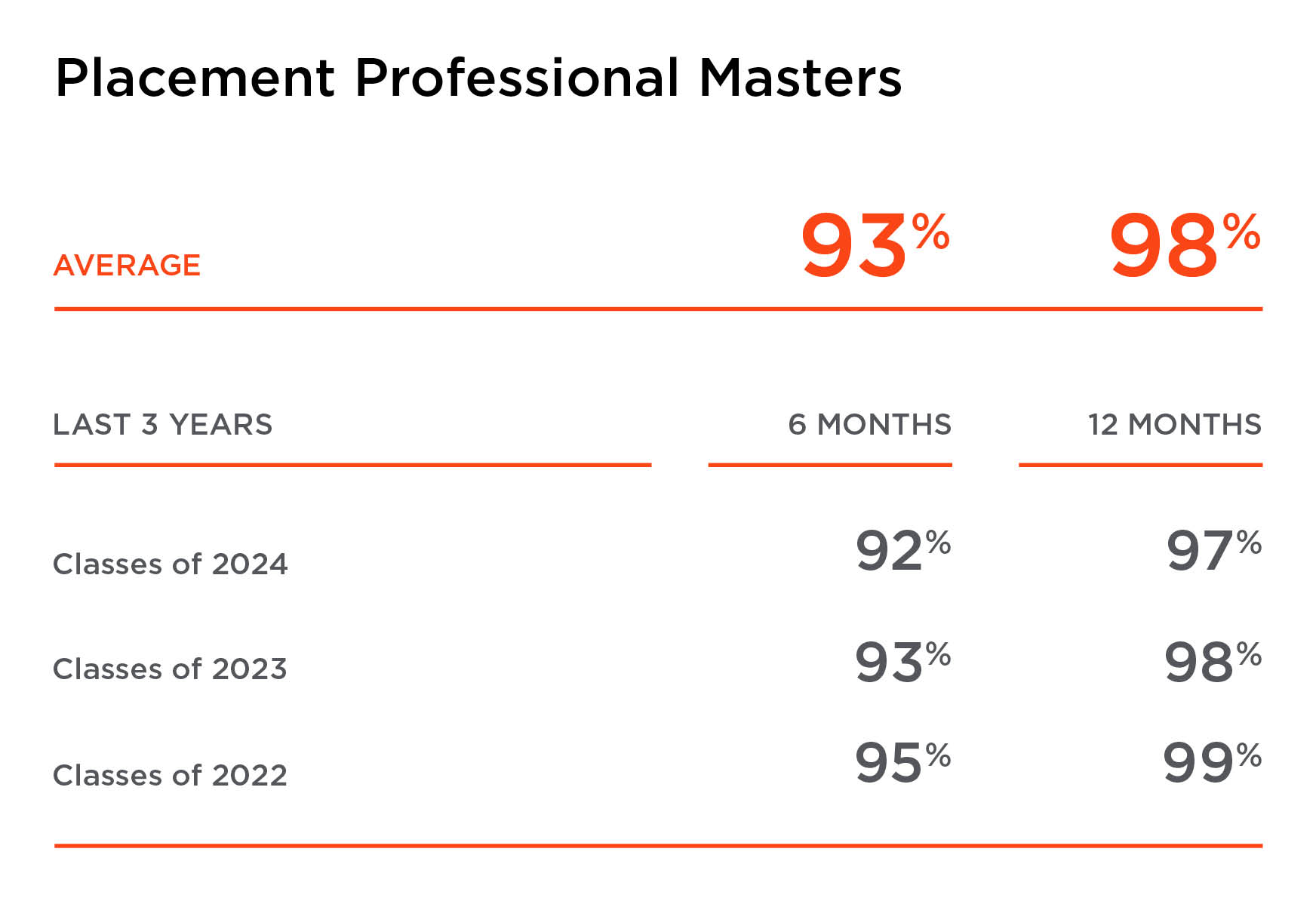
The internship is an exceptional springboard, suffice it to say that six months after the end of the full-time masters at Bologna Business School on average 91% of students work in a company.
The BBS Career Service assists and supports students since the very beginning, along a training and professional development path. This is accomplished by organizing a series of workshops, with the aim of providing the fundamental tools and resources to be appropriately prepared for the labor market.
To achieve this goal, students are involved in several workshops, among which we may list:
- Writing a CV and a Cover Letter
- How to create an effective LinkedIn profile
- How to prepare for a job interview
In addition to this, thanks to the collaboration with professional career counselors, students receive a customized service, in order to understand their strengths and to build a professional development plan, which will turn out to be helpful when looking for an internship. Here follow some of the activities:
- Initial guidance interviews
- Specific interviews, focused on one’s own career plan
- Continuous support to students with one-to-one session
Alumni

Antonio Rispoli – Italy
Wealth & Asset Management Consultant, Prometeia
Master in Entrepreneurial Finance (A.Y. 2023/2024)
"The Master has been a pivotal step in building a high-level international network of classmates, alumni, and industry professionals, many of whom I have had the opportunity to collaborate with on concrete projects. The program offers strong technical foundations in fintech, data analysis, quantitative tools, and financial innovation, while opening doors to outstanding career opportunities at international institutions and companies. To future students, my advice is to be proactive, push beyond their comfort zone, and fully embrace the intensity of the Master. The value of this experience truly grows exponentially over time."

Nicolò Venturi – Italy
Founder, VCF (M&A)
Master in Entrepreneurial Finance (A.Y. 2022/2023)
"The Master's program is an adventurous journey that will give you a better understanding of the skills that companies in the financial world require and apply every day. This path allowed me to gain in-depth knowledge of today's banking system, financial markets, and understand how they are evolving through digitization and disruptive technologies. This Master's program also allowed me to make friends with students from all over the world, an experience I will never forget. Last but not least, this course spurred me to open my own consulting firm in Merger & Acquisition."
COMPANIES
The goal of the Career Service is also to allow students to connect with national and international companies. Over the years, Bologna Business School has managed to establish a wide-ranging network and a sound partnership with leading companies in Italy, thanks to a personalized approach, based on each company’s needs. The collaboration features the following activities:
- Sending CV Books
- Sharing internship opportunities
- Company presentations
- Career days
- Project works
- In-class activities with case studies presented by Managers and/or HR professionals
Moreover, companies support the Master in Finance with scholarships, professional opportunities, career fairs and company presentations.
The companies that worked with us in 2024/2025 are:
ACCENTURE AMAZON AMPLIFON AUTOCLUB AXYON AI BAKER HUGHES BPER CINECA CNA CRIF COESIA DELOITTE EMILIA FOODS EY FEDRIGONI GRUPPO UNIPOL LEROY MERLIN MANAGEMENT SOLUTIONS MOLESKINE MUSIXMATCH NTT DATA POMELLATO PWC RENTOKIL RICHEMONT RONCUCCI & PARTNERS SCRAMBLY SCS CONSULTING SIA PARTNERS SUPERNOVAE LABS THE FORK VICEVERSA WORLD FOOD PROGRAMME
FEES
The tuition fee for the Master is 14,800 euro (VAT-free) to be paid in three installments:
- First installment: 1,850 euros (by the enrollment deadline of the round you applied for)
- Second installment: 7,000 euros (by 30/11/2026)
- Third installment: 5,950 euros (by 28/02/2027)
The fee includes participation in the Master, all the study material available through the online platform, and access to the services and facilities of Bologna Business School. Furthermore, the fee gives participants the right to take advantage of the supporting activities of the School, such as the language courses and the master lectures by invitation. Free parking is also available within the BBS Campus.
Additionally, with the Student Card of the University of Bologna, students have access to all of the university facilities, including over 100 libraries, digital resources and study halls (including databases and online subscriptions) and all university student related discount offers. More information is available on the site of the University of Bologna: http://www.unibo.it/it/servizi-e-opportunita
HONOR LOAN
For more information on honor loan, contact us by email: professionalmasters@bbs.unibo.it
SCHOLARSHIPS
At Bologna Business School, we believe in the merit and potential of our students. That’s why, for each round of selection, we offer partial scholarships of €4,000 and €6,000 to candidates who stand out for their academic background, professional experience, motivation, and career aspirations.
Scholarships are awarded by the Admissions Committee, following the selection process, to the most deserving candidates who are ready to make the most of a learning experience that combines academic quality, links with a strong business newtork, and an international outlook.
Please note that full scholarships are not available and that financial aid programs from the University of Bologna (i.e. DSU, ER.GO) are not eligible for the Professional Masters held at Bologna Business School.
INPS SCHOLARSHIPS
The promoting entity offers scholarships for the partial coverage of enrollment fee, intended for candidates who meet the requirements set forth in the relevant Call for Applications. The publication date of the Call has not yet been determined. For updates and further details, please consult the official website.
REQUIREMENTS
Admission is subject to passing the selection process, in compliance with the number of available places. To enrol in the Master, candidates must hold:
- a first-cycle Bachelor’s degree, obtained by the enrollment deadline of the selected round
- a minimum B2 level of English proficiency
The selection process is held online and includes an aptitude test and an English language test, both required in order to access the motivational interview in English.
APPLICATION PROCESS
The application process consists of the following steps:
- Register on “Studenti Online” by connecting to the site studenti.unibo.it
2. Select: First Level Master > Master in Finance
3. Pay the participation fee for the selection (60 euro)
4. Upload the required documents online:
- Curriculum Vitae in English
- Motivation letter in English
- Concentration form
- Letter of reference in English (optional)
- Identification photo
- Identity document or passport (front and back)
- For degrees obtained in Italy: Bachelor’s degree certificate including the list of exams and grades
- For degrees obtained abroad: Bachelor’s degree certificate including the transcipt of records and official documents required for the verification and validation of the foreign qualification in Italy (list available here).
Pending the issuance of such documents, which must be submitted by the start date of the Master, applicants are required to upload the Conditional Enrollment Form.
Additional documentation (if available):
- GMAT certification (score ≥ 550) or equivalent GRE certification
(which exempts candidates from the aptitude test) - English language certification (TOEFL, IELTS or Cambridge) certifying a minimum B2 level
(which exempts candidates from the English language test)
To apply for the next available round of selection, please consult and download the following documents:
CALL FOR APPLICATIONS – MASTER IN FINANCE 2026/27 GENERAL CALL – UNIBO PROFESSIONAL MASTERS 2026/27 CONCENTRATION FORM CONDITIONAL ENROLLMENT FORM OPERATING INSTRUCTIONS – STUDENTI ONLINECONTACT US
DOWNLOAD BROCHURE
Book your orientation meeting
-
Overview
-
Structure
-
FACULTY
-
Careers & Companies
-
Fees & Financial Aid
-
Apply
-
More
Information -
Download
brochure -
Book your orientation meeting