Loccioni, an ecosystem of sustainable innovation: the company visit of the Global MBAs
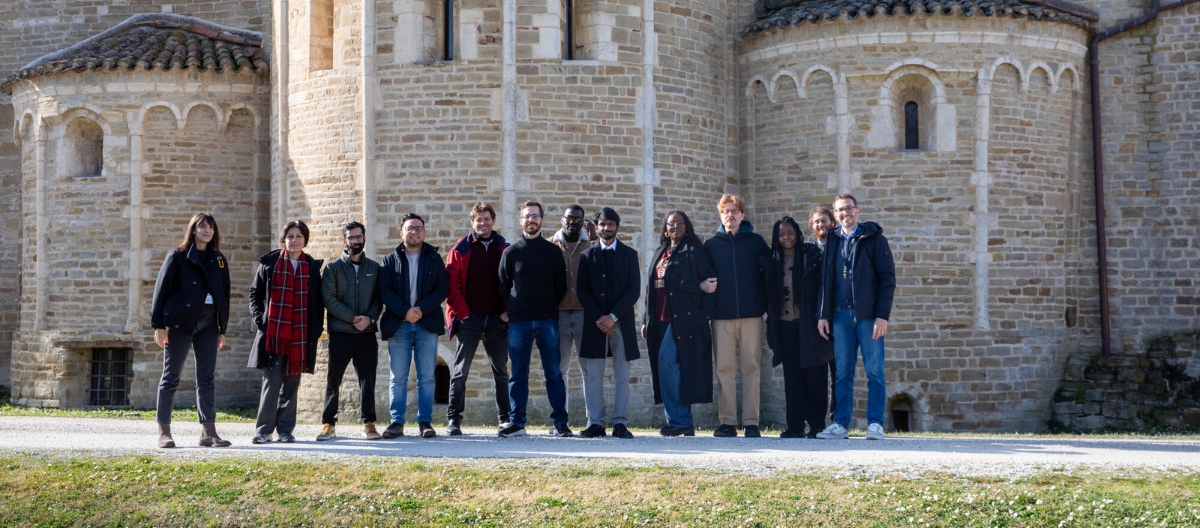
2 February 2026A day at Loccioni allowed students from the Global MBA Sustainability and Innovation and Global MBA AI and Manufacturing to engage with a company that tangibly integrates technological innovation, sustainability and people-centric culture.
Company visits are an integral part of the Global MBA experience: moments when what is discussed in the classroom takes shape in real industrial choices, projects and organizational cultures.
A company as an ecosystem
For Giuseppe Picca, Global MBA Sustainability and Innovation, Loccioni “appears as much more than a technology-driven company: it is a living ecosystem where innovation, sustainability, territory and people are deeply interconnected.”
The visit was “a journey through time”: from the Basilica of Sant’Urbano and the Loccioni family story to the areas where the most advanced solutions for industrial partners are designed and tested. Along this path, he notes, a “long-term vision clearly emerges, one that never separates economic success, social impact and responsibility towards the local area.” What stands out in particular is the way the company nurtures its bond with the local context: a model Picca describes as “enlightened”, recalling the Olivetti legacy, where technological excellence and a human, collaborative and curious atmosphere coexist in everyday work.
Innovation and problem-solving from an AI and manufacturing perspective
For Bakop Ngassam Ricardo, Global MBA AI and Manufacturing, Loccioni is an innovative company, able to grow “despite its geographical location, by nurturing young local talent and building a culture based on precision, professionalism and innovation.”
The focus is not on standard production, but on tailor-made solutions for clients: “innovation is always oriented toward problem-solving,” he explains, “with projects driven by a combination of scientific rigor and a quasi-philosophical approach, which balances technical excellence, long-term strategic vision and collaboration.”
This approach, he adds, is strengthened by “a strong spirit of collaboration and teamwork, which makes the environment feel like a real family” – something far from obvious in a highly technological context.
Sustainability as a strategic lever
Both students stress that at Loccioni, sustainability, innovation and technology are not parallel tracks but parts of a single strategy. Picca cites the case of the Esino river, which after the floods of the 1990s represented a threat for both the local area and the company: Loccioni chose to take care of a two-kilometre stretch, transforming it “from a threat into a resource”, combining safety, environmental rehabilitation and landscape enhancement.
Another key example is the Second Life Storage System, which explores energy storage solutions based on batteries from electric vehicles at the end of their first life cycle. Ricardo says he “particularly appreciated the approach to recycling batteries to give them a second life in concrete and measurable projects”, also because his Business Planning project work focuses precisely on battery recycling. Seeing a real solution in action helped him understand how “sustainability can be integrated into solid business models, rather than remain just an abstract principle.”
People and talent at the center
The visit also highlighted how Loccioni works on human capital. Picca underlines the company’s ability to “cultivate local talent over the long term”, accompanying young people along growth paths that combine training, increasing responsibility and close ties with the territory.
Ricardo adds that he found “extremely interesting their approach to engaging young talent”: the company ignites “passion and vocation for stimulating work, both manual and managerial” and supports each person “until they achieve their academic, professional and personal goals”, also through dedicated days throughout the year to explore, learn and get to know the corporate culture from the inside.
Impact on the Global MBA journey and future careers
From a learning perspective, the experience left a strong mark, reinforcing in the students the conviction that true innovation emerges at the intersection of technology, sustainability and human capital, and raising the question of how to design, in the future, business models that are rooted in local contexts yet capable of generating long-term social and environmental value.
For Ricardo, the main takeaway is that “technology alone is not enough”: real impact is created when “advanced systems are combined with a clear purpose, collaboration and a long-term vision.” The visit confirmed the importance of integrating operational excellence, strategic vision and sustainability as drivers of innovation and competitive advantage, and opened a question that will guide his career: how to help create environments where young talent is inspired, supported and empowered, while at the same time achieving measurable results for the company, society and individuals.
The company visit at Loccioni showed Global MBA students how values, culture and innovation can coexist in an advanced industrial model, offering a concrete perspective on what it means to lead the sustainable transformation of companies and global value chains.