Hackathon with Gruppo Montenegro: designing HR tools between method and intuition
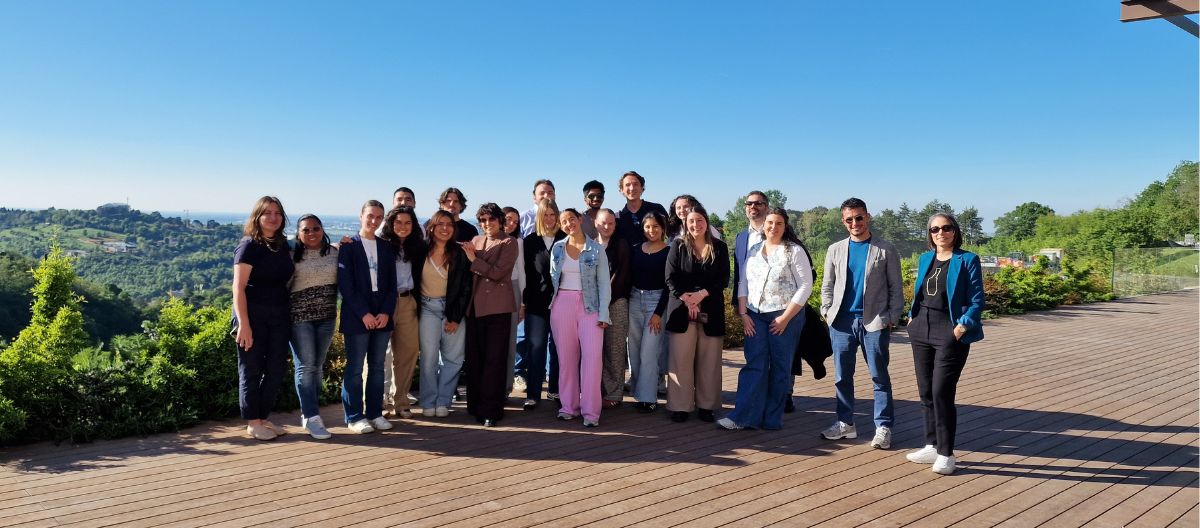
30 April 2026Testing skills in a real-world context, engaging with industry professionals, and turning theory into practical tools. This is the framework of the hackathon carried out by students of the Master in HR & Organization together with Gruppo Montenegro, an experience that fully reflects the approach of generative education, where learning and application seamlessly integrate.
During the session, participants worked in teams to design an operational toolkit for hiring managers: a tool created to clearly and effectively guide the key phases of the recruitment process. An activity that required not only technical expertise, but also synthesis, vision, and collaboration.
The challenge was introduced by Giada Marasco, Antonio De Pascali, and Nino Zhvani, professionals from Gruppo Montenegro, who provided students with direct insight into current business needs in talent acquisition and development.
From theory to practice: designing to decide better
At the core of the hackathon was the development of concrete solutions, focused on three key areas: identifying core competencies, applying the STAR method to structure interviews, and building scorecards for objective and comparable evaluations.
“Taking part in the hackathon with Gruppo Montenegro was an immersive experience that pushed us to think concretely as HR professionals, going beyond academic theory,” says Lavinia Fanelli, participant in the Master. “It’s a format that doesn’t allow you to stay in theory, but requires you to turn intuition into action almost in real time.”
Among the projects developed, the concept of the “Barrel of Competences” stands out: a metaphor that views each candidate as a unique combination of skills, weighted according to the role. An approach that makes the decision-making process more visible and structured, enabling more informed evaluations.
Under pressure: choosing, simplifying, collaborating
One of the defining elements of the experience was the limited time, which required teams to make quick decisions and defend them consistently. “The biggest challenge was finding the right balance between simplicity and rigor,” Fanelli continues. “Building something intuitive yet aligned with the values and culture of a structured company requires a sensitivity that cannot be learned from books alone.”
In this context, teamwork played a central role. The hackathon proved to be an exercise in collective intelligence, where listening, integrating different perspectives, and synthesis directly impacted the quality of the final outcome.
A new awareness of the HR role
Beyond technical tools, the experience helped develop a broader and more strategic view of the HR function. “I leave this experience with something that goes beyond technical skills: a clearer understanding of what it means to work in HR strategically,” Fanelli concludes. “The design work behind a selection process is often invisible, but that is exactly where the quality of a process is determined.”
The hackathon represents a concrete example of how the Master in HR & Organization at Bologna Business School integrates academic rigor with practical application, preparing professionals to operate in complex and constantly evolving environments. Through direct engagement with companies and high-impact experiential activities, the program fosters immediately applicable skills and a stronger awareness of one’s role in driving organizational change.