Company visit at CINECA: supercomputing and AI to understand the future of innovation
15 May 2026Getting a close look at one of Europe’s most advanced supercomputing infrastructures means understanding how artificial intelligence, data management and computational power are transforming the worlds of business and research.
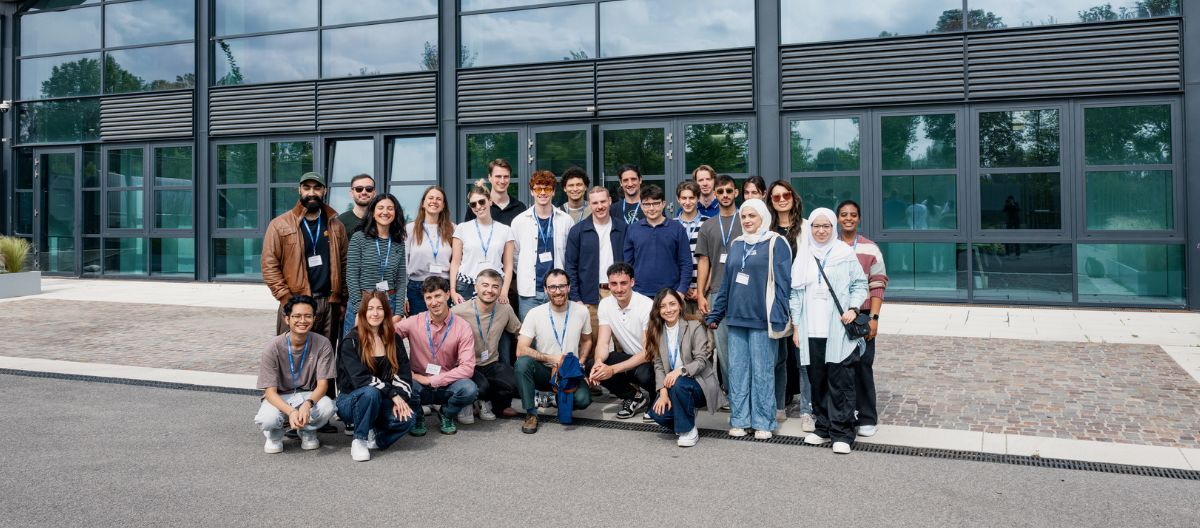
This was the experience of the students from the Professional Master in Artificial Intelligence for Management and the Professional Master in Data Science and Business Analytics at Bologna Business School during the recent company visit at CINECA.
Founded in 1969 as a non-profit consortium, CINECA is now one of the leading computing centres in Italy and a European reference point for high performance computing, digital transformation and the development of advanced technological applications. Among its infrastructures stands Leonardo, one of the world’s most powerful supercomputers, used for scientific research projects, complex simulations and artificial intelligence applications.
The visit gave students the opportunity to engage directly with technologies and projects that represent practical applications of many topics covered throughout their academic journey: cloud computing, scalable AI, data infrastructure management and technological innovation.
One of the most significant moments of the visit was the access to the data centre hosting the supercomputer. Brian O’Sullivan, student in the Professional Master in Artificial Intelligence, described the experience:
“The most impressive part of the visit was stepping into the data centre housing the supercomputer. The noise from the cooling systems was deafening, but it immediately conveyed the enormous computational power of the infrastructure.”
The visual and technological impact of the facility allowed students to fully grasp the scale of investment and expertise required to support the development of contemporary artificial intelligence.
“I was blown away by the hardware density and the level of investment involved. Realising that a single GPU installed in one of the servers is worth around €30,000 really helps put the scale of the project into perspective.”
Particular interest was also generated by the presentation of LISA, the new infrastructure developed by CINECA to support cloud-based artificial intelligence workflows.
“Seeing a world-class institution investing in infrastructure specifically designed for artificial intelligence perfectly reflects the growing demand for scalable AI architectures that we discuss during lectures.”
The visit also highlighted how advanced supercomputing infrastructures are becoming increasingly accessible to European startups and SMEs through initiatives aimed at supporting the AI ecosystem.
“Knowing that small and medium-sized enterprises can also access high performance computing resources like Leonardo is extremely encouraging. It means there is a real opportunity for European startups to develop advanced models and innovative projects using top-level infrastructures.”
Through experiences like this, Bologna Business School continues to strengthen the connection between education, innovation and business, offering students concrete opportunities to engage with organisations that are helping shape the future of digital transformation and artificial intelligence.